At the end of last year, I received a Copyright Agency grant to write my next standalone novel, But Won’t I Miss Me? – a philosophical speculative fiction work that is set in a society where women who give birth to children also give birth to a new version of themselves. I’ve been writing from Singapore, where my husband, children, and I have relocated for all of 2023.
The wonderful/maddening thing about being former academic is that I tend to do a lot of research while I write. I don’t view it so much as a choice but an obligation. And although it means I can get ‘bogged down’, it also gives me a chance to marinate and absorb the information I discover.
This book is set in an alternative reality where women undergo a natural process called ‘rebirth’ when they give birth to a child (i.e. they give birth to a new version of themselves that replaces the old self). But it is also an alternative reality in other respects: a world where strict legislation regarding environmental sustainability has been in force since the early 2000s. This has resulted in a whole host of ways in which the world of the novel diverges from ours: meat is an expensive luxury good, as are private vehicles; thanks to technological breakthroughs in the area of electricity, inefficient AC (Alternating Current) grids have been replaced with ones that supply low-voltage DC (Direct Current); the internet was nipped in the bud and smartphones never became a thing (fun fact: the carbon footprint of the internet is sizeable and growing; and mining the rare earth elements required for modern digital tech does significant environmental damage as well).
In short, life in the novel is much lower tech and more spartan – at least for the majority of people who can’t afford the expensive tech and goods to make their lives more convenient and comfortable. In this parallel world, the protagonist of the novel works as someone who repairs old AC-powered appliances and machines and makes them compatible with the new low-voltage DC grid.
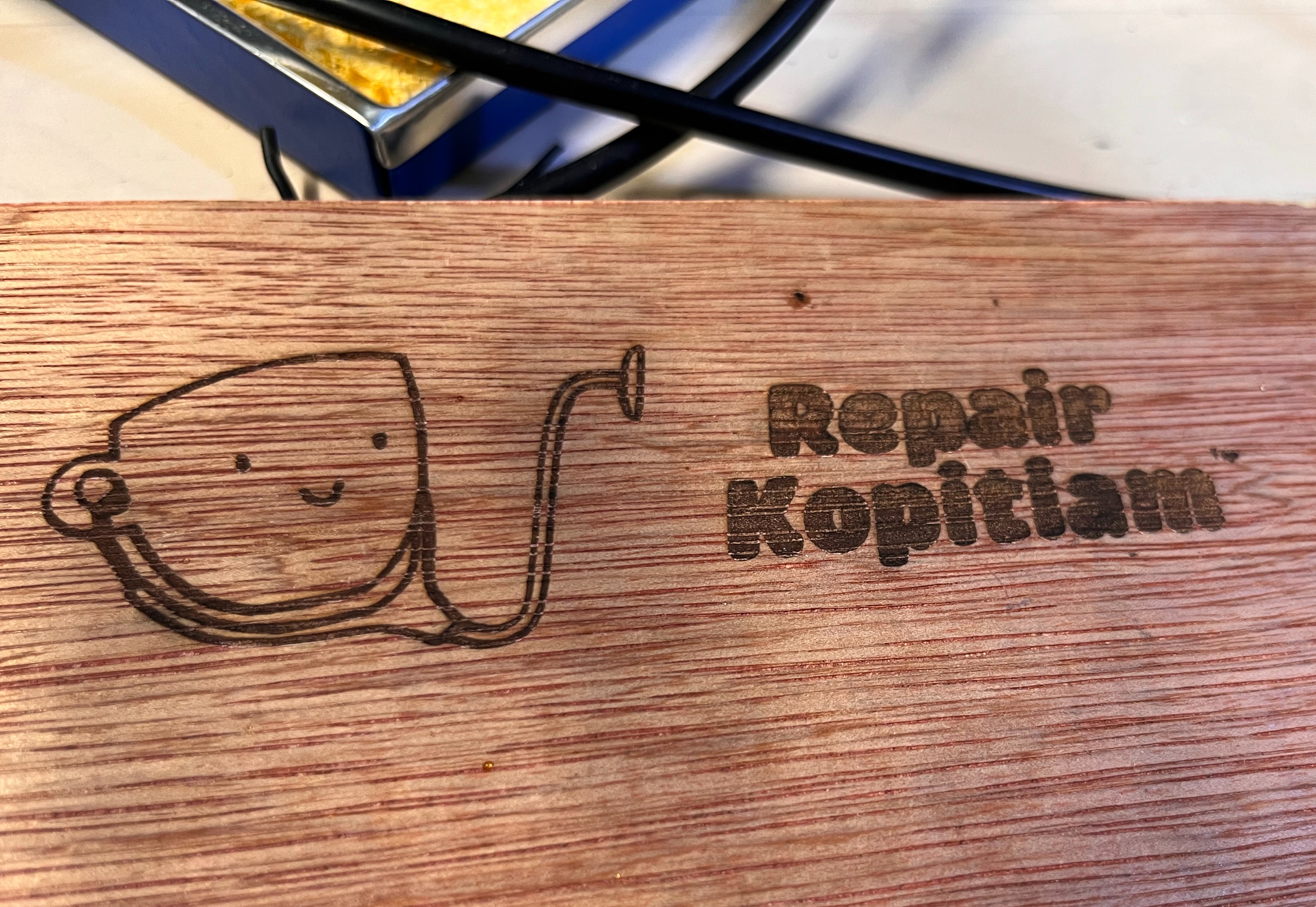
Research for this novel led me not only to do a lot of reading on electricity and electrical systems. It also led me to take a day-long electrical appliance repair course with a wonderful community org in Singapore called Repair Kopitiam. They encourage people to fix their things rather than throw them away. They hold meetups at various sites where people can bring their items to volunteer coaches who help repair them on the spot. And they run day-long handyman courses and more sustained repair-coach training courses where people can learn the skills to fix things themselves and help others fix things as well.
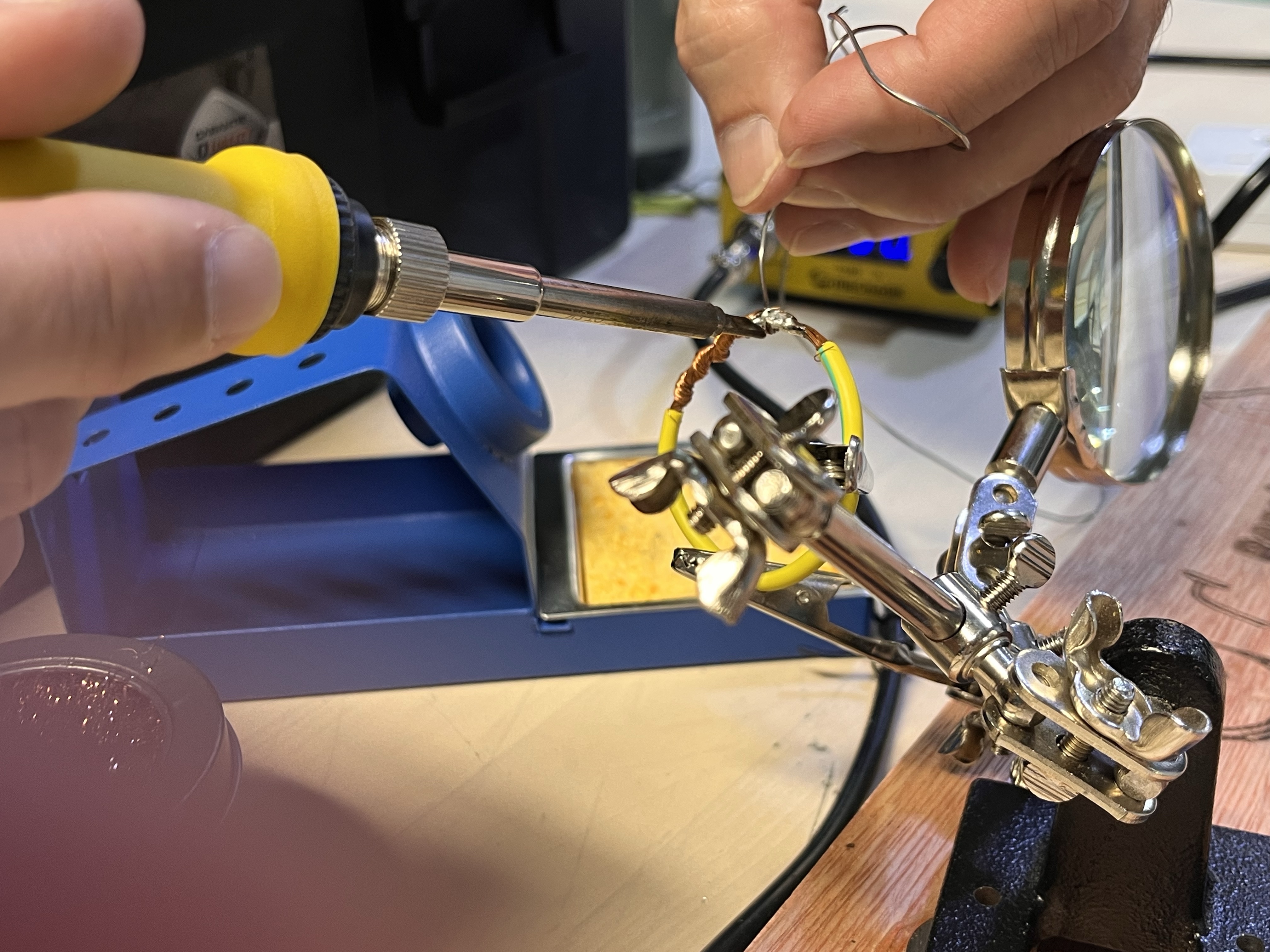
Here are some photos from the course I took on electrical appliance repair. Most of the coaches were older people, as were most of the students. We learned basic principles, important safety information, and got to practice using a multimeter, rewiring a plug, and soldering. Ironically, the course started late because of a building-wide power outage!

Why conceive of such a setting for the novel? And such a profession for my protagonist? Especially for a novel that, on the face of things, deals with pregnancy and motherhood?
The answer is: I wanted this issue of ‘inefficiency’ versus ‘efficiency’; of ‘economical’ versus ‘wasteful’ to be woven throughout the novel. As someone for whom motherhood was a difficult time, physically, mentally, and spiritually speaking, I want the novel to consider how mothers in modern society are expected to perform at inhuman standards of efficiency and perfection. In this world I’m creating, where new mothers are ‘reborn’ and thus ‘renewed’ biologically, such efficiency and perfection comes naturally. But the result is a society where there is no quarter given for a mother whose biological renewal goes wrong.
Much to write and think about! In the meantime, here is a list of interesting reads/videos that I’ve come across in the course of processing motherhood and electrical efficiency:
- This paper from the International Electrotechnical Commission website on LVDC (Low Voltage Direct Current
- This YouTube video from KEMET electronics on the difference between AC and DC
- How to fix a toaster
- The Cultural Contradictions of Motherhood by Sharon Hays (Yale University Press, 1998). My historian friend Zhou Taomo, who is also a mother of small children, recommended it. I ended up highlighting so much of it when it coincided with my own feelings and experiences. Even though I’m not sure I entirely agree with the conclusion, and even though it was written in the 1990s, I think it still does an accurate job of articulating and documenting the immense and intense pressures “modern” mothers feel.
There’s a third thread I’m weaving into this novel as well: the state of being diasporic Chinese. More on this in a post to come.
Discover more from tiffany tsao
Subscribe to get the latest posts sent to your email.

 tiffany tsao